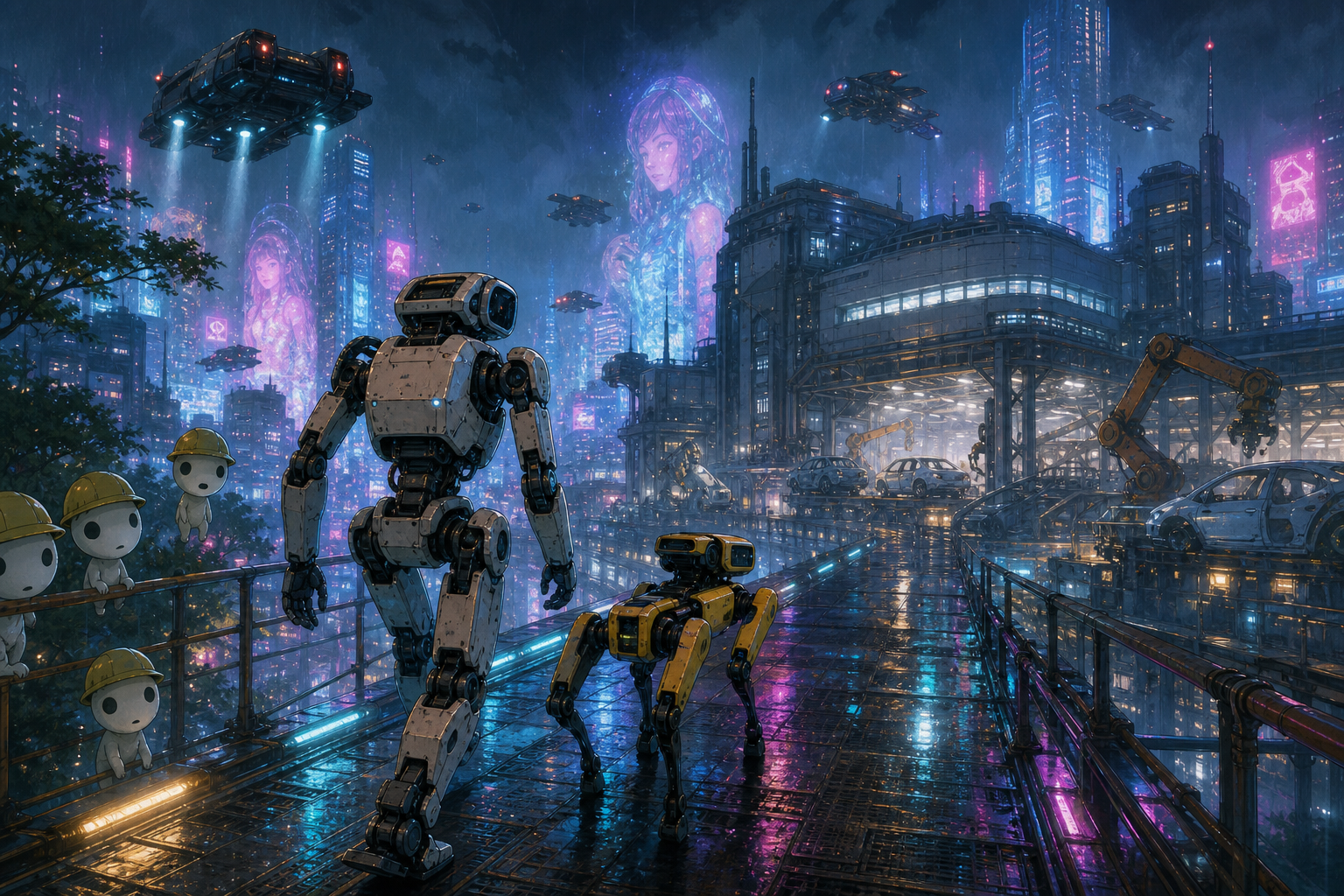
Hyundai is buying SoftBank's last 9.65% of Boston Dynamics for $325 million — full ownership, factory deployment, no more demo-only era.


Via StartupFortune: Hyundai takes full control of Boston Dynamics as SoftBank exits for $325 million
Hyundai Motor Group is acquiring SoftBank's remaining 9.65% stake in Boston Dynamics for $325 million, completing full ownership of the Waltham robotics company, according to Startup Fortune and reporting from The Next Web. The group's board is expected to approve the deal on June 22, 2026.
For owner-led firms, the headline is not venture-capital housekeeping. It is operational AI in physical form. Boston Dynamics spent years famous on YouTube — Spot doing backflips, Atlas dancing — while buyers asked when any of it would show up on a factory floor with uptime targets. Hyundai's answer: Atlas is slated for work at the company's Metaplant electric vehicle factory near Savannah, Georgia, by 2028, starting with parts sequencing before heavier tasks toward 2030.
SoftBank is exercising a put option retained when Hyundai bought an 80% stake in 2021 for roughly $880 million, valuing Boston Dynamics at about $1.1 billion then. The $325 million mop-up removes minority shareholder friction and gives Hyundai undivided control of actuators, service networks, and deployment timelines — including vertical integration through Hyundai Mobis on Atlas hardware.
Humanoid robotics stopped being a science fair the moment carmakers started treating robots as manufacturing infrastructure, not conference demos. At CES in January 2026, Hyundai and Boston Dynamics showed an electric Atlas walking a stage under remote pilot — but the useful detail was the deployment plan, not the stagecraft.
Boston Dynamics CEO Robert Playter told Business Insider that Atlas would need to learn new factory tasks in a day or two and hit 99.9% reliability before it earns a place on the line. That is the bar that separates novelty from operations — and it is the bar SME owners should use when vendors pitch "autonomous agents" for physical work.
The competitive field is crowded. Tesla has tied part of its Fremont story to Optimus. Figure AI has run trials with BMW. China's Unitree keeps pushing lower-cost humanoids. None of that removes Boston Dynamics' locomotion pedigree — but none of them needs to win every market. They need to win specific jobs.
Hyundai's edge is it owns the first customer: its own plants. SoftBank, meanwhile, is redeploying capital toward AI infrastructure plays like Roze AI — robots building data centers, not assembling cars. Different bets. Hyundai's is easier to audit because the KPI is production uptime, not valuation narrative.

The $325 million price tag sounds small against Hyundai's scale. The control it buys is the point — in a race where machines are finally reaching factory floors, partial ownership is partial accountability.
Atlas would need to learn new factory tasks in a day or two and reach 99.9% reliability before it could be truly useful on the floor. — Robert Playter, Boston Dynamics CEO, via Business Insider
Hyundai's Boston Dynamics buyout is a reminder that capability bets eventually become operations bets. Demos scale on YouTube. Factories scale on governance.
This is the work AgentsROI.ai does.
AgentsROI.ai does not sell humanoids. It sells judgment about what belongs on your floor — digital or physical — and who owns the outcome when it breaks.
SoftBank walked away for $325 million. Hyundai kept the keys. Atlas is headed for a Georgia EV plant by 2028. Whether that succeeds will be measured in sequenced parts and shift reliability — not viral videos.
Book a Workflow ROI Audit or Model Selection session and find out where physical and digital automation actually pay off in your business — before you buy the robot or the platform.
This article summarizes publicly reported information from Startup Fortune (June 19, 2026), The Next Web, and related reporting. It is for general informational purposes only. It does not constitute legal, tax, financial, investment, security, or compliance advice. AgentsROI.ai is not a law firm, accounting firm, or registered investment adviser. Facts, pricing, statistics, and product capabilities cited here reflect the sources listed at the time of writing and may change. Readers should verify current information independently and consult qualified professionals regarding obligations specific to their industry, jurisdiction, and circumstances—including applicable New York State and New York City requirements. Nothing in this article is an endorsement of any specific robotics product, vendor, or provider. References to Hyundai, Boston Dynamics, SoftBank, or other companies describe reported corporate transactions and do not constitute investment recommendations.